
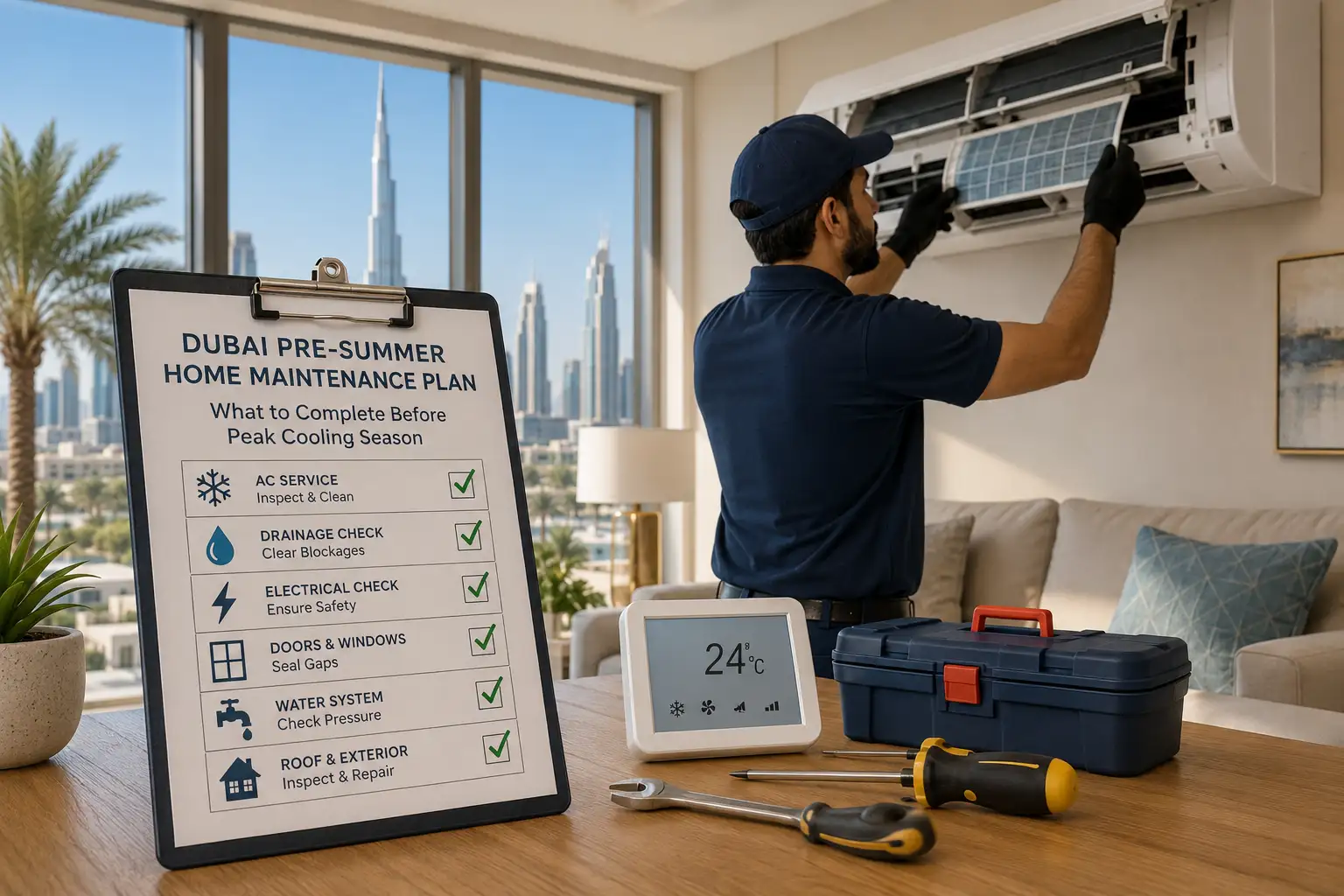

A practical pre-summer home maintenance plan in Dubai should begin several weeks before cooling demand reaches its peak. The goal is not simply to clean an AC filter. It is to test cooling performance, identify condensate and drainage risks, review electrical and water systems, and confirm that faults have been corrected before the home depends on them every day.
Dubai homes can move quickly from comfortable conditions to near-continuous cooling. A system that appears acceptable during mild weather may struggle once temperatures rise, occupancy increases and several units operate together. Small concerns such as weak airflow, a slow condensate drain, pump noise or loose door seals can become disruptive under sustained load.
The strongest approach is staged. Start with simple homeowner observations, test the home under normal operating conditions, arrange professional service where needed, and finish with a documented readiness check.
Why Pre-Summer Timing Matters in Dubai
Waiting for the first breakdown creates two disadvantages. The home is already relying heavily on cooling, and service demand is usually higher. A pre-summer review gives owners time to identify abnormal performance, approve repairs and verify the result before the system is under maximum duty.
Pre-summer maintenance should also extend beyond the AC system. Air leakage around windows and doors increases cooling demand. Blocked drains can turn condensate into ceiling damage. Electrical weaknesses may appear only when several cooling units, pumps and appliances operate together. Water pressure and irrigation issues can become more noticeable as household and landscape use increases.
The Four-Week Pre-Summer Readiness Plan
| Week | Main objective | Homeowner action | Professional action |
| Week 1 | Observe and record | Check temperatures, airflow, odour, leaks, noise, pressure and visible damage | None unless an urgent fault is identified |
| Week 2 | Test systems under normal use | Run cooling zones, test thermostats, observe drains, pumps and electrical behaviour | Diagnostic attendance for abnormal symptoms |
| Week 3 | Service and correct | Provide fault notes and access details | HVAC service, condensate checks and approved corrective work |
| Week 4 | Verify readiness | Confirm comfort, pressure, drainage and closure of defects | Final checks for unresolved technical concerns |
Week 1: Observe the Home Before Servicing
The first week is about creating a useful condition record. Homeowners should not dismantle equipment. Instead, they should note symptoms that help a technician distinguish routine cleaning from a developing fault.
- Compare room temperatures and identify zones that feel consistently warmer.
- Check whether airflow feels weak or noticeably different between vents.
- Listen for buzzing, rattling, grinding or repeated starting and stopping.
- Look for water stains, droplets or damp odour around indoor AC units and ceilings.
- Check whether thermostats respond normally and display consistent readings.
- Observe water pressure at several fixtures and note fluctuations.
- Look under sinks and around visible pipes for moisture or staining.
- Check doors and windows for damaged seals or obvious gaps that admit heat and dust.
Take photographs of visible concerns and note when each symptom occurs. A fault that appears only in the afternoon, when several systems are operating, may be difficult to reproduce during a brief visit without this information.
Week 2: Test Cooling, Drainage and Essential Systems
The second week moves from observation to controlled testing. Run the cooling system under normal household conditions rather than briefly switching on one unit.
Check whether each occupied zone reaches a comfortable temperature, whether airflow remains steady and whether unusual noise or odour develops after extended operation. Do not use an extreme thermostat setting as a performance test. The objective is to assess normal operation, not force the equipment beyond its intended control.
During this period, watch for delayed condensate leakage. Some drainage problems appear only after the system has produced moisture for an extended time. Staining, dripping, a musty smell or water collecting near an indoor unit should be investigated rather than covered or repeatedly dried.
Week 3: Arrange Professional Cooling and Condensate Service
Professional servicing should focus on the condition and performance of the installed system, not merely visible cleaning. The exact scope depends on whether the home uses split units, ducted systems, fan coil units or another arrangement.
A useful service review may include filters, coils, drain pans and condensate routes, electrical connections, fans, motors, thermostats, airflow and visible insulation condition. Where cooling is weak, the technician should diagnose the cause rather than assume that refrigerant is the answer.
Effective pre-summer HVAC maintenance should confirm whether the system is clean, draining correctly, operating safely and delivering reasonable performance before peak-season demand.
Do Not Ignore Condensate and AC Water Leakage
Condensate is a normal result of cooling, but water entering the room is not. Common risk areas include blocked drain lines, dirty drain pans, damaged insulation, poor gradients, loose connections and previous repairs that addressed the symptom without restoring reliable drainage.
The maintenance record should identify the confirmed source of water and the corrective action taken. Simply clearing visible water does not prove that the underlying problem has been resolved.
Check Electrical Behaviour Before Peak Load
Homeowners can safely observe the system, but electrical panels and internal components should be left to qualified personnel. Warning signs include repeated breaker trips, burning smell, heat, buzzing, discolouration or equipment that starts intermittently.
A breaker that trips repeatedly should not be treated as an inconvenience to reset. It may indicate an equipment, wiring or load issue that requires diagnosis. Pre-summer timing allows this to be assessed before daily cooling demand increases.
Review Plumbing, Water Pressure and Drainage
Summer preparation should include visible plumbing checks because small leaks can damage cabinets, ceilings and finishes while higher household use makes pressure problems more disruptive.
- Inspect under sinks, around toilets and near visible valves.
- Check for slow drainage, gurgling or recurring odour.
- Observe whether water pressure changes when several fixtures operate.
- Listen for unusual booster-pump cycling or vibration where a pump system is installed.
- Check external taps and irrigation areas for persistent leakage.
Chemical drain cleaners should not be used as a universal solution. Recurring blockage, sewage odour or backflow needs proper investigation, especially where several fixtures are affected.
Inspect Door Seals, Windows and Heat Entry Points
Cooling performance is affected by the property envelope. Damaged weather seals, gaps around frames and doors that do not close correctly allow heat and dust to enter, increasing the load on the cooling system.
Homeowners can visually inspect accessible seals and note drafts, dust lines or daylight around frames. Specialist assessment may be appropriate where there is repeated water ingress, façade cracking or a larger envelope concern.
Villas Need Additional Pump, Tank and Exterior Checks
Apartments and villas share many cooling and plumbing priorities, but villas often include additional systems such as water tanks, booster pumps, irrigation, pools, gates and larger external areas.
Before summer, note pump noise, pressure fluctuation, visible leakage and abnormal cycling. Inspect accessible roof, balcony and external drainage areas for obstruction or obvious deterioration. Review irrigation direction so water is not persistently wetting walls or paved areas.
Pool and landscape systems should be treated as operating equipment, not only appearance features. Unexplained water loss, pump noise or poor circulation deserves investigation.
Week 4: Verify That the Home Is Ready
The final week is for confirmation, not another list of unchecked tasks. Run the systems under normal use and verify that the original symptoms have been addressed.
- Rooms reach stable, comfortable conditions without obvious imbalance.
- Airflow is consistent and vents are unobstructed.
- There is no visible condensate leakage or persistent damp odour.
- Thermostats and controls respond normally.
- No repeated electrical trip, heat or abnormal noise has returned.
- Water pressure is stable and visible leaks have been closed.
- Corrective work is documented, with unresolved items clearly identified.
Retain the service report, photographs and approvals. These records help identify recurring faults and give the next technician a clearer starting point.
Turn One Pre-Summer Check into a Year-Round Plan
A pre-summer visit is valuable, but it should not become the only maintenance event of the year. Filters, drainage, plumbing, pumps and electrical systems continue to operate after the initial service.
An annual maintenance contract in Dubai can place preventive visits, emergency response, reporting and corrective follow-up into a recurring schedule rather than restarting the process after every fault.
The scope should still be clear. Owners should confirm the systems covered, preventive visit frequency, emergency terms, exclusions, consumables policy and approval process for repairs.
Pre-Summer Warning Signs That Should Not Wait
| Warning sign | Immediate action | Priority |
| Burning smell, smoke or hot electrical point | Isolate power only where safe and seek qualified help | Emergency |
| Repeated breaker trip | Stop repeated resetting and arrange diagnosis | Urgent |
| Active AC water leak near electrical items or premium finishes | Protect the area, isolate the affected unit where safe and request attendance | Urgent |
| Weak cooling across several rooms | Record symptoms and arrange system assessment | Priority |
| Low water pressure with abnormal pump noise | Limit use if necessary and request pump-system inspection | Priority |
| Slow drain affecting one fixture | Avoid misuse and schedule inspection if it persists | Planned |
A Better Summer Starts Before the Heat Peaks
Pre-summer maintenance is most effective when it is completed early enough to test, repair and verify. A rushed AC cleaning after the first breakdown does not provide the same protection.
The four-week plan creates a practical sequence: observe, test, service and verify. It also recognises that a comfortable Dubai home depends on more than one cooling unit. Condensate drainage, electrical behaviour, water pressure, pumps, seals and property condition all contribute to summer readiness.
Homeowners do not need to become technicians. They need to record useful symptoms, avoid unsafe intervention and ensure that professional work addresses the cause, not only the visible result.
Frequently Asked Questions
When should pre-summer home maintenance be completed in Dubai?
Begin several weeks before sustained peak cooling demand. This provides time to observe performance, complete servicing, approve repairs and verify that the original problem has been resolved.
What should a pre-summer AC service include?
The scope depends on the installed system, but it may include filters, coils, condensate pans and drains, fans, electrical components, controls, airflow and visible insulation condition.
Can homeowners clean an AC system themselves?
Homeowners can inspect accessible filters where the manufacturer permits and observe symptoms. Internal electrical, refrigerant, coil, motor and concealed-drain work should be handled by qualified personnel.
Why does an AC leak water in summer?
Possible causes include blocked condensate drainage, dirty pans, damaged insulation, poor drainage gradient or another system defect. The source should be confirmed rather than assumed.
Do apartments and villas need the same summer checklist?
They share cooling, electrical and plumbing priorities, but villas may also require checks of tanks, booster pumps, irrigation, pools, roofs and larger external areas.