
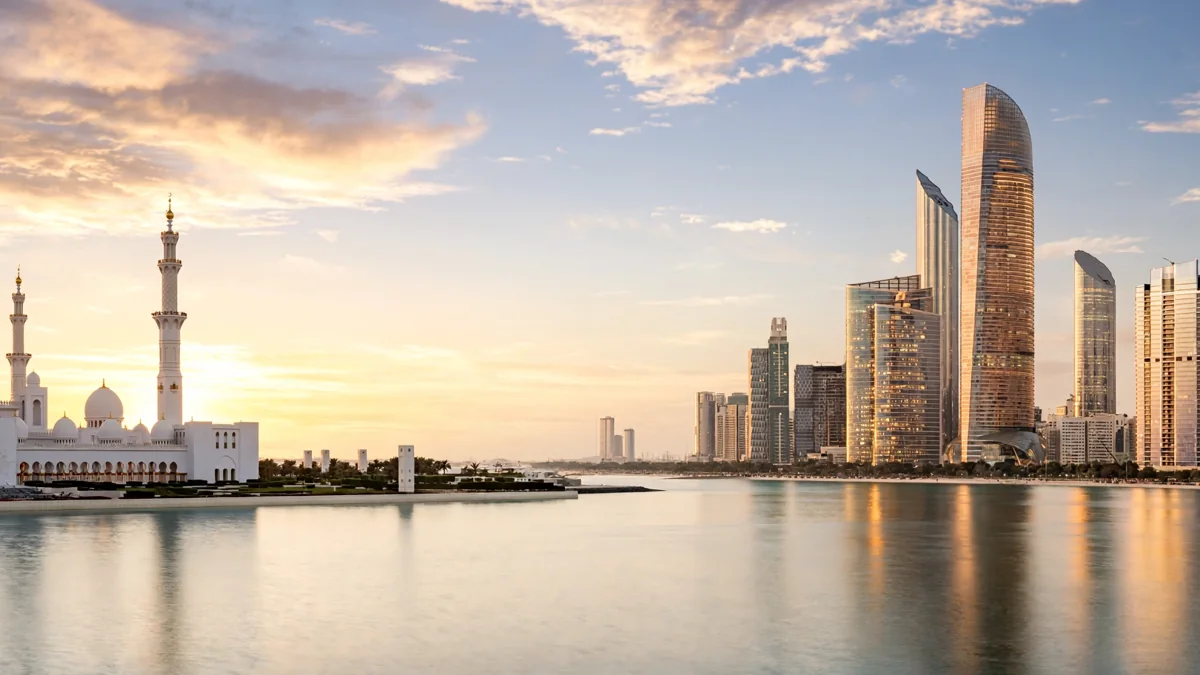

An Abu Dhabi city guide is most useful when it helps you make practical choices: where to base yourself, how to move between districts, and how to group landmarks without spending the day in traffic. The capital is spread out, elegant and noticeably calmer than Dubai, with island districts, cultural landmarks, family attractions and long waterfront promenades. Whether you are visiting for a weekend or settling into life in the emirate, a little planning turns Abu Dhabi into an easy city to enjoy.
Start by thinking of Abu Dhabi as a collection of connected areas rather than one compact centre. The Corniche and downtown suit first-time visitors who want hotels, cafés and sea views. Yas Island is built around theme parks, events and family entertainment. Saadiyat Island is the cultural and beach district, while Khalifa City and the mainland suburbs feel more residential. Each area has its own rhythm, so the best itinerary depends on the kind of trip you want.
Abu Dhabi city guide: choosing the right area
The Corniche is the classic introduction to the city. Its long waterfront, cycle paths and skyline views make it ideal for morning walks and relaxed evenings. Staying nearby puts you within easy reach of Qasr Al Watan, Emirates Palace, Marina Mall and many business hotels. It is also a sensible base if you do not plan to hire a car, because taxis are straightforward and several headline sights sit along the western side of the island.
Yas Island works best for families and event weekends. Ferrari World, Yas Waterworld, Warner Bros. World and the Yas Marina Circuit area create a very different atmosphere from the historic centre. If theme parks are the reason for your visit, staying on Yas saves repeated cross-city journeys. For a broader journey between the two cities, read our guide on how to get from Dubai to Abu Dhabi before deciding whether to drive, take a bus or book a transfer.
Saadiyat Island is the choice for culture and quieter beaches. Louvre Abu Dhabi anchors the district, and the natural beach setting feels removed from the city without being remote. Khalidiyah and Al Bateen, by contrast, offer a more local mix of cafés, villas and waterfront living. Our Khalidiya Mall Abu Dhabi guide gives a flavour of that established neighbourhood and its everyday facilities.
Landmarks and experiences to prioritise
Sheikh Zayed Grand Mosque is the essential Abu Dhabi landmark. Plan it as a dedicated visit rather than a quick photo stop: allow time for arrival, entry procedures, the courtyards, prayer hall details and the reflective pools. Dress respectfully, follow the visitor route and check the official visitor requirements before you travel because arrangements can change for religious occasions and events.
Louvre Abu Dhabi deserves a similarly unhurried visit. The building itself, with its geometric dome and pools of light, is as memorable as the galleries. Pair it with time on Saadiyat’s beach or a nearby café rather than rushing straight across the city. Qasr Al Watan offers a different kind of grandeur: it is a working presidential palace open to visitors, with vast ceremonial halls and exhibitions about governance and craftsmanship.
For a slower afternoon, walk or cycle a section of the Corniche, visit the Founder’s Memorial, or explore Mangrove National Park by kayak when conditions suit. Families can devote a full day to Yas Island instead of sampling every attraction briefly. If you are driving into the emirate, it is sensible to review the rules to enter Abu Dhabi from Dubai and keep your documents and vehicle paperwork in order.
Getting around Abu Dhabi
Taxis are often the simplest option for short visitor itineraries because districts are spread out and parking patterns vary by destination. Ride-hailing and hotel taxis are widely used, while a hired car gives more freedom for Yas, Saadiyat and mainland trips. Drivers should plan routes in advance and allow extra time around events, school hours and peak commuting periods.
Public buses connect major districts and transport hubs, and they can be economical for residents who know their routes. Start with our Abu Dhabi Bus Station guide if you are travelling between cities or want to understand the main terminal. Within the city, combine buses with short taxi rides rather than assuming every attraction sits beside a stop.
Drivers should also know how fines and tolls work before setting off. Darb toll gates operate at selected Abu Dhabi bridges during peak periods, and unfamiliar drivers can miss account requirements. Our Abu Dhabi traffic fine check guide explains how to check and deal with fines, while your rental company can confirm how tolls and salik-style charges are billed on a hire vehicle.
Food, shopping and everyday stops
Abu Dhabi’s food scene ranges from long-running cafeterias and South Asian restaurants to hotel dining and polished Emirati restaurants. Downtown and Khalidiyah are good for independent cafés and everyday meals; Yas Mall and Marina Mall suit family days; Saadiyat and the Corniche lean more towards destination dining. Rather than chasing a single famous restaurant, choose food near the district you are already exploring so the day stays relaxed.
Shopping is similarly spread out. Large malls combine supermarkets, cinemas and family entertainment, while smaller centres serve neighbourhood needs. If you are relocating, spend time in a district at different hours: morning school traffic, evening parking and weekend noise tell you more than a single viewing appointment. Visit a supermarket, pharmacy and mosque or community facility nearby to understand how daily life will actually work.
A simple two-day Abu Dhabi itinerary
On day one, begin at Sheikh Zayed Grand Mosque, continue to Qasr Al Watan and finish with a Corniche walk at sunset. Keep lunch near your route and avoid adding Yas Island to the same day unless you are happy with a late finish. On day two, choose one theme: culture on Saadiyat with Louvre Abu Dhabi and the beach, or family entertainment on Yas Island. This simple structure leaves space for coffee stops, prayer breaks, traffic and the unplanned discoveries that make a city break enjoyable.
Residents can adapt the same approach when hosting visitors. Show guests one landmark district per day, mix a cultural visit with a local meal, and build in rest during the hottest part of the afternoon. In summer, indoor attractions and early starts matter; in winter, the Corniche, kayaking and beach clubs become the highlights.
Practical tips for a smoother visit
Carry water, plan indoor breaks and dress with both the climate and local expectations in mind. Mosques and government buildings require respectful clothing, and photography rules vary by site. Book major attractions and special exhibitions ahead at busy times, but do not overload the schedule. Abu Dhabi rewards a slower pace: its appeal lies in space, order and contrast — monumental culture on one island, family energy on another and calm residential streets in between.
Used well, this Abu Dhabi city guide is a framework rather than a checklist. Pick a base, group sights by island or district, and let transport shape the day. You will see more, spend less time crossing the city and leave with a clearer sense of how the capital fits together.